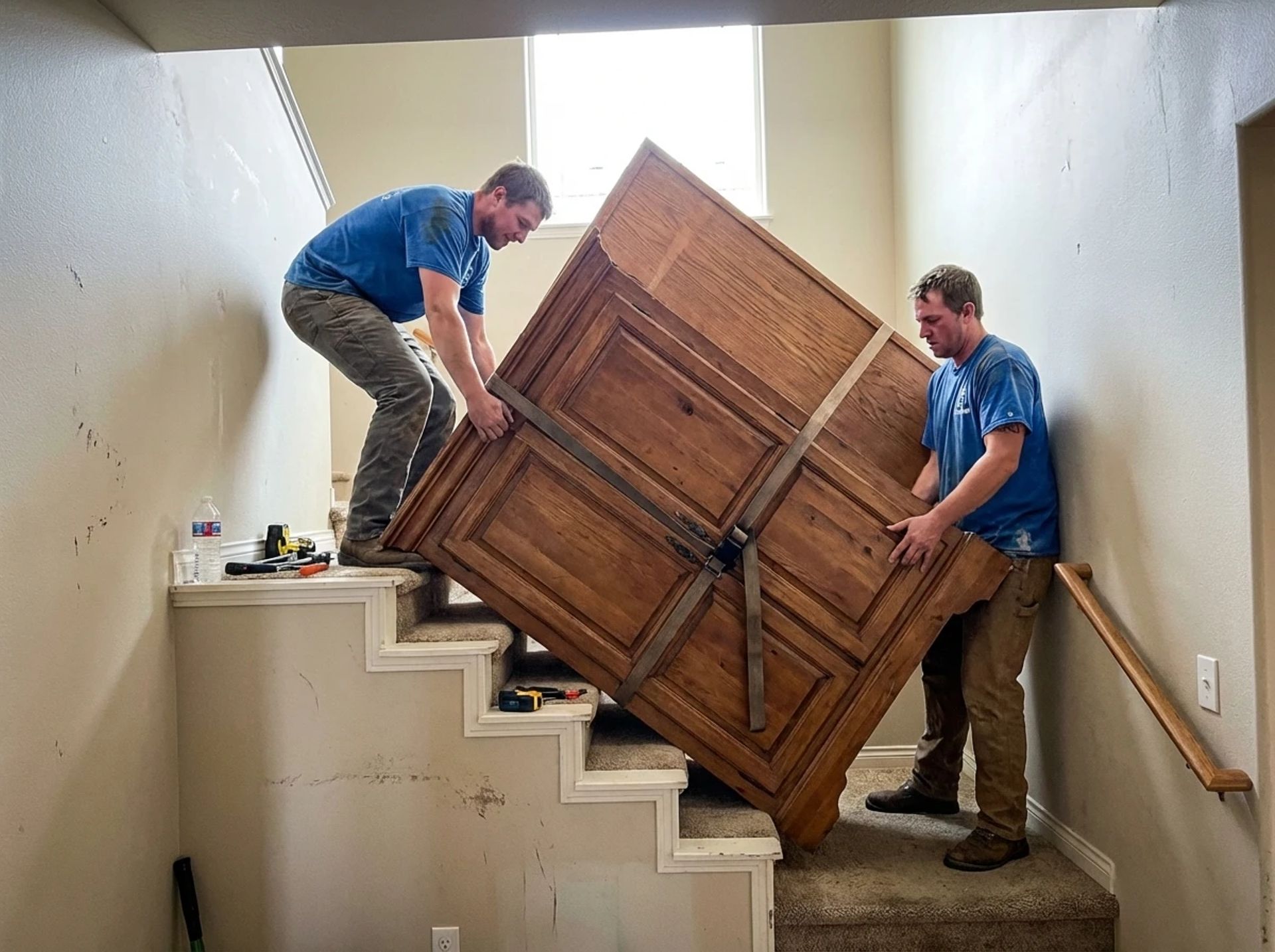
How to Remove Heavy Furniture Safely
A full-size sleeper sofa weighs around 350 pounds. A solid wood armoire can hit 400. Your old upright piano? 500+ easily. Getting these out of your Boise home without injury takes more than enthusiasm.
Here's how to move heavy furniture safely when you're doing it yourself—and how to know when you should just call for backup.
Before You Touch Anything
The setup matters as much as the lifting:
Clear the path. Measure doorways, hallways, and any turns. Know exactly how the furniture is getting out. Move anything in the way. Nothing's worse than getting stuck halfway out the door.
Assess the weight honestly. Can you and your helper actually lift this? If you're not sure, you probably can't. A back injury costs way more than hiring help.
Get the right gear. Work gloves for grip. Closed-toe shoes with good traction. Furniture sliders for carpet. A furniture dolly if you have one.
Find a capable partner. Two people minimum for anything heavy. Three or four for really big pieces. Don't try to be a hero—physics always wins.
Proper Lifting Technique
Every back injury story starts with "I thought I could just..."
Smart Strategies for Heavy Pieces
Work smarter, not just harder:
Disassemble what you can. Remove drawers from dressers. Take legs off tables. Separate sectional pieces. Every pound you remove makes a difference.
Use furniture sliders. On carpet, these plastic or felt discs let you slide heavy pieces instead of lifting. Works great for getting to the door.
Walk, don't carry. For something like a couch, tip it on end and "walk" it through doorways. One person stabilizes while the other pivots.
Use a dolly or hand truck. Once you're outside, wheels make everything easier. Even a basic furniture dolly dramatically reduces effort.
Go high-low on stairs. The person at the top walks backward downstairs while the bottom person faces forward. The top person bears less weight this way.
Dealing With the Tricky Pieces
Sleeper sofas: These are deceptively heavy—the metal frame and mattress add serious weight. Often need three people minimum. Consider removing the mattress if possible.
Pianos: Upright pianos are top-heavy and unpredictable. Grand pianos are worse. This is honestly when you should just call professionals with a piano board.
Cast iron tubs and old appliances: Pure dead weight with no good grip points. Multiple strong people and proper equipment required.
Gun safes: Can weigh 500-1,000+ pounds. Specialized equipment is not optional.
Anything down steep basement stairs: Gravity is not your friend. The risk multiplies with every step.
When to Call for Help
Sometimes DIY isn't worth it. Call professionals when:
You don't have enough people. Heavy furniture requires enough hands. If you're trying to recruit reluctant family members, just call someone.
There are stairs involved. Stairs multiply difficulty and danger. A piece that's manageable on level ground becomes hazardous on stairs.
You have physical limitations. Bad back? Recent injury? Over 50 with no regular lifting experience? Your body is telling you something.
The piece is exceptionally heavy. Anything over 200 pounds with two people is pushing it. Over 300 pounds, you need either more people or equipment you probably don't have.
Tight spaces or awkward angles. When the furniture barely fits through doorways or around corners, professionals who do this daily know the angles.
The Bottom Line
Moving heavy furniture yourself is doable if you have the right help, proper technique, and realistic expectations about what you can handle.
But here's the thing: a herniated disc or torn rotator cuff costs thousands in medical bills, months of recovery, and long-term pain. Professional furniture removal costs a fraction of that.
Be honest with yourself about your capabilities. There's no shame in calling for help—that's why services like ours exist.
Need the Heavy Lifting Done?
We move heavy furniture all day. We have the equipment, the technique, and the muscle. Save your back.
Call (208) 247-8845